把棋盘压成五个列栈,按字典序做深度恰好为 n 的 DFS,配合逐层局面去重与无效移动剪枝,首个清空局面即字典序最小解。
OJ: roj
题目 ID: 3590
难度:提高
标签:搜索剪枝模拟python
创建: 2026-10-02 09:28
更新: 2026-10-10 11:30
形式化题目
棋盘是 5 列(
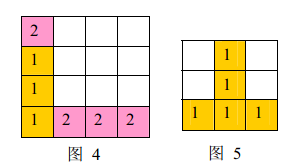
一次移动:选中有方块的格子
- 目标
有方块:两块原地交换位置; - 目标为空:该块从原竖列中抽出(原列上方的方块补落一格),再从目标位置掉落,直到不悬空。
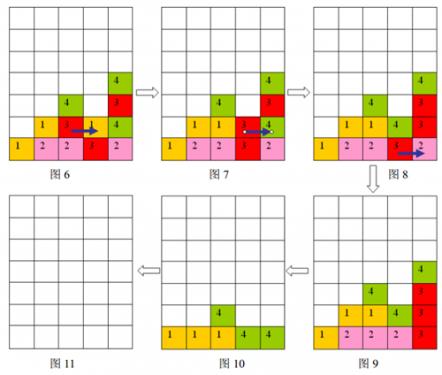
消除结算:只要某一横行或某一竖列上出现连续三个或更多同色方块,所有满足条件的方块同时被消除——一次移动可以同时触发多组,行列共享某个方块时也只消一次;随后上方方块掉落,掉落过程中不做检查,落定后若又出现三连就继续消,如此反复直到局面稳定。
目标:用恰好
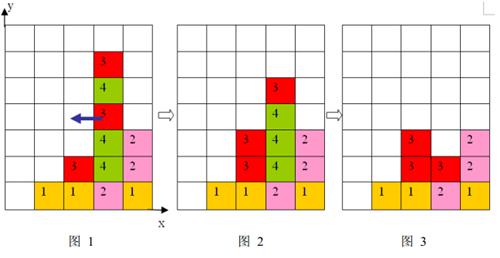
以题目样例(
| 阶段 | x=0 | x=1 | x=2 | x=3 | x=4 |
|---|---|---|---|---|---|
| 初始 | 1 | 2/1 | 2/3/4 | 3/1 | 2/4/3/4 |
| 第 1 步 拖动 (2,1)→ | 1 | 2/1 | 2/1/4 | 3/3 | 2/4/3/4 |
| 第 2 步 拖动 (3,1)→ | 1 | 2/1 | 2/1/4 | 3/4 | 2/3/3/4 |
| 第 3 步 拖动 (3,0)→ | 1 | 2/1 | 2/1/4 | 2/4 | 3/3/3/4 |
| 第 3 步 级联 1 | 1 | 1 | 1/4 | 4 | 4 |
| 第 3 步 级联 2 | 空 | 空 | 4 | 4 | 4 |
| 第 3 步 级联 3 | 空 | 空 | 空 | 空 | 空 |
这张表是后文所有规则的对照样本。前两步都只交换方块、没有凑出三连,说明一次移动不一定会触发消除;第 3 步把
正解
思路
朴素做法:把移动当转移,全枚举。 每个局面的合法移动数是各列方块数之和的两倍(每块可左可右,边界列少一个方向),满盘 35 块时约 70 个分支;题面数据范围
第一步:状态压成列栈。 因为方块不悬空,
- 目标有方块 → 两列在高度
处交换,两列交换后仍然实心,不需要先掉落; - 目标为空 → 因为目标列实心且
空,目标列高 ,方块不会被挡住, 源列弹出 y 处 + 目标列尾部插入一步同时完成"原列补落"和"落到目标列顶"。
消除则写成"标记 None 补齐成定长 5 后扫连续段,竖列直接在栈上扫连续段,行列标记放进同一个集合再按列过滤——过滤本身就是掉落压实,外层循环到没有三连为止,正好实现"消除、掉落、再消除"的连锁。整个转移与棋盘尺寸同阶,是常数时间的纯函数,tuple 可哈希,局面可以直接进 set,连编码函数都省了。
第二步:让搜索顺序等于输出顺序。 题目要字典序最小的解,于是按
第三步:剪枝。
- 同层去重:同一层出现相同局面时,剩余步数相同、后续可行走法集合完全相同,先到的那次已经完整搜过(否则早已返回成功),后到的必然失败,直接跳过。注意
seen必须按层分桶——判据是"恰好第步清空",第 层的子问题要求"再走 步",不同层的同局面不是同一个子问题,用全局 set合并会丢解。 - 无效移动:目标出界不合法;目标方块与源方块同色时交换后局面完全不变,直接跳过。
单步结算与搜索主循环的流程如下:
flowchart TD
    A["search(s, d):第 d 步的局面 s"] --> B{"d == n ?"}
    B -->|是| C{"s 已全空 ?"}
    C -->|是| D["沿途回溯记录移动,返回成功"]
    C -->|否| E["失败回溯"]
    B -->|否| F{"s 已在第 d 层展开过 ?"}
    F -->|是| E
    F -->|否| G["登记 s 进 seen[d]"]
    G --> H["按 x、y、方向(先 1 后 -1) 枚举移动"]
    H --> I["slide:拖动 + 消除级联"]
    I --> J["search(新局面, d+1)"]
    J -->|成功| D
    J -->|失败| H
流程图强调两件事:成功判定只发生在 d == n 的叶子上;seen[d] 的查询发生在枚举移动之前,所以整棵重复子树在入口处就被剪断,而不是展开后再发现重复。
代码
/**
* Author by Rainboy blog: https://rainboylv.com github: https://github.com/rainboylvx
* rbook: -> https://rbook.roj.ac.cn https://rbook2.roj.ac.cn
* rainboy的学习导航网站: https://idx.roj.ac.cn
* create_at: 2026-10-10 11:30
* update_at: 2026-10-10 11:30
*/
#include <bits/stdc++.h>
using namespace std;
typedef long long ll;
const int W = 5, Hh = 7;
typedef vector<vector<int> > Board;
string encode_board(const Board &cols) {
string s;
for (int x = 0; x < W; x++) {
s.push_back('|');
for (int y = 0; y < (int)cols[x].size(); y++) {
s += to_string(cols[x][y]); s.push_back(',');
}
}
return s;
}
bool clear_once(const Board &cols, Board &out) {
bool mark[W][Hh]; memset(mark, 0, sizeof(mark));
int rows[Hh][W];
for (int y = 0; y < Hh; y++) for (int x = 0; x < W; x++) rows[y][x] = y < (int)cols[x].size() ? cols[x][y] : -1;
for (int y = 0; y < Hh; y++) {
int x = 0;
while (x < W) {
int k = x;
while (k + 1 < W && rows[y][x] != -1 && rows[y][k + 1] == rows[y][x]) k++;
if (k - x >= 2) for (int i = x; i <= k; i++) mark[i][y] = true;
x = k + 1;
}
}
for (int x = 0; x < W; x++) {
int y = 0;
while (y < (int)cols[x].size()) {
int k = y;
while (k + 1 < (int)cols[x].size() && cols[x][k + 1] == cols[x][y]) k++;
if (k - y >= 2) for (int i = y; i <= k; i++) mark[x][i] = true;
y = k + 1;
}
}
bool any = false;
out.assign(W, vector<int>());
for (int x = 0; x < W; x++) for (int y = 0; y < (int)cols[x].size(); y++) {
if (mark[x][y]) any = true; else out[x].push_back(cols[x][y]);
}
return any;
}
bool slide_board(const Board &cols, int x, int y, int d, Board &res) {
int x2 = x + d;
if (x2 < 0 || x2 >= W || y >= (int)cols[x].size()) return false;
Board moved = cols;
if (y < (int)moved[x2].size()) {
if (moved[x][y] == moved[x2][y]) return false;
swap(moved[x][y], moved[x2][y]);
} else {
int color = moved[x][y];
moved[x].erase(moved[x].begin() + y);
moved[x2].push_back(color);
}
Board nxt = moved, tmp;
while (clear_once(nxt, tmp)) nxt = tmp;
res = nxt;
return true;
}
bool search_board(const Board &cols, int depth, int limit, vector<set<string> > &seen, vector<array<int,3> > &path) {
if (depth == limit) {
for (int x = 0; x < W; x++) if (!cols[x].empty()) return false;
return true;
}
string key = encode_board(cols);
if (seen[depth].count(key)) return false;
seen[depth].insert(key);
for (int x = 0; x < W; x++) for (int y = 0; y < (int)cols[x].size(); y++) {
int dirs[2] = {1, -1};
for (int z = 0; z < 2; z++) {
Board nxt;
if (slide_board(cols, x, y, dirs[z], nxt) && search_board(nxt, depth + 1, limit, seen, path)) {
path.push_back({x, y, dirs[z]});
return true;
}
}
}
return false;
}
int main(){
ios::sync_with_stdio(false); cin.tie(nullptr);
int steps; if (!(cin >> steps)) return 0;
Board columns(W);
for (int x = 0; x < W; x++) { int color; while (cin >> color && color != 0) columns[x].push_back(color); }
vector<set<string> > seen(steps);
vector<array<int,3> > path;
if (search_board(columns, 0, steps, seen, path)) {
for (int i = (int)path.size() - 1; i >= 0; i--) cout << path[i][0] << ' ' << path[i][1] << ' ' << path[i][2] << '\n';
if (path.empty()) cout << '\n';
} else cout << -1 << '\n';
return 0;
}#!/usr/bin/env python3
# Author by Rainboy blog: https://rainboylv.com github: https://github.com/rainboylvx
# rbook: -> https://roj.ac.cn https://rbook2.roj.ac.cn
# rainboy的学习导航网站: https://idx.roj.ac.cn
# create_at: 2026-10-02 09:42
# update_at: 2026-10-02 09:42
import sys
W = 5 # 棋盘横向列数,x ∈ [0, 4]
H = 7 # 棋盘纵向行数,y ∈ [0, 6]
# 局面编码:5 元组,第 x 个元素是第 x 列的颜色序列(从下往上),空格子就是列比 y 短。
def clear_once(cols):
"""消去一次:横行或竖列出现连续三块同色就整组删掉,返回掉落压实后的新局面;无三连返回 None。"""
mark: set[tuple[int, int]] = set()
# 每行先补成定长 5,空位用 None 占据(None 不参与同色比较)
rows = [[col[y] if y < len(col) else None for col in cols] for y in range(H)]
for y, row in enumerate(rows):
x = 0
while x < W:
k = x
while k + 1 < W and row[x] is not None and row[k + 1] == row[x]:
k += 1
if k - x >= 2: # 连续段长度 ≥ 3
mark.update((i, y) for i in range(x, k + 1))
x = k + 1
for x, col in enumerate(cols):
y = 0
while y < len(col):
k = y
while k + 1 < len(col) and col[k + 1] == col[y]:
k += 1
if k - y >= 2:
mark.update((x, i) for i in range(y, k + 1))
y = k + 1
if not mark:
return None
# 行、列的三连在同一轮里一起删:按列过滤即让被删格上方的方块掉落
return tuple(
tuple(color for i, color in enumerate(col) if (x, i) not in mark)
for x, col in enumerate(cols)
)
def slide(cols, x: int, y: int, d: int):
"""把 (x, y) 的方块横向拖 d 格并结算消除连锁;不合法或局面不变时返回 None。"""
x2 = x + d
if x2 < 0 or x2 >= W or y >= len(cols[x]): # 出界或该格没方块
return None
src, dst = list(cols[x]), list(cols[x2])
if y < len(dst):
if src[y] == dst[y]: # 换的是同色方块,局面完全不变,属于无效移动
return None
src[y], dst[y] = dst[y], src[y] # 目标位置有方块:原地交换
else:
dst.append(src.pop(y)) # 目标为空:从竖列抽出,落到目标列顶(目标列必不高于 y)
moved = list(cols)
moved[x], moved[x2] = tuple(src), tuple(dst)
nxt = tuple(moved)
while (changed := clear_once(nxt)) is not None: # 消除后掉落可能再次触发消除
nxt = changed
return nxt
def search(cols, depth: int, limit: int, seen: list[set], path: list) -> bool:
"""按字典序 DFS:从第 depth 步的局面出发,恰好用满 limit 步清空棋盘;找到即把路径倒序留在 path。"""
if depth == limit:
return not any(cols) # 只有走满全部步数时清空才算解
if cols in seen[depth]: # 同一层的相同局面:先前那次已经搜过全部续接,直接剪掉
return False
seen[depth].add(cols)
for x in range(W):
for y in range(len(cols[x])): # y 由小到大,配合外层 x 即字典序
for d in (1, -1): # 同一格先向右(1 优先于 -1)
nxt = slide(cols, x, y, d)
if nxt is not None and search(nxt, depth + 1, limit, seen, path):
path.append((x, y, d)) # 回溯时记录,最后反转成正序
return True
return False
def solve() -> None:
data = iter(map(int, sys.stdin.buffer.read().split()))
steps = next(data)
columns = []
for _ in range(W):
column = []
while (color := next(data)) != 0: # 每列以 0 结尾,自下向上
column.append(color)
columns.append(tuple(column))
seen: list[set] = [set() for _ in range(steps)]
path: list[tuple[int, int, int]] = []
if search(tuple(columns), 0, steps, seen, path):
print('\n'.join(f'{x} {y} {d}' for x, y, d in reversed(path)))
else:
print(-1)
if __name__ == "__main__":
solve()复杂度
- 时间复杂度:设按层去重后实际展开的局面总数为
,方块总数 ,则每个局面最多枚举 个移动、每次结算只做固定 的扫描(常数 ),总计 ,即关于 线性;未剪枝的搜索树上界为 , 。 - 空间复杂度:
,保存各层已展开局面的集合;递归深度 ,调用栈 。
总结
- 本题是"小深度状态空间搜索 + 确定性模拟":难点不在算法思想,而在把交换、抽出、同时消除、连锁掉落这几条规则无遗漏地落成一个纯函数转移。
- 局面表示选对了,实现就短:列栈让"抽出 + 落地"变成一次
pop+ 一次append,让"掉落压实"变成一次过滤,让状态去重变成一个set。 - 要字典序最小的解,就把枚举顺序写成字典序,第一个成功解无需比较。
- 去重必须分层:同层同局面才等价,跨层剩余步数不同,合并会丢解。
- 本解法复杂度与正解同阶;实测 10 组真实数据全部一致,最慢约 2.1s(本地限时 20s),Python 侧存在 OJ 限时风险但算法本身没有退化成暴力。
图示解析
这张图串起本题从建模到得到答案的主线:
状态 = 5 个列栈(可哈希 tuple,35 格常数转移)
|- 单步结算:拖动(交换/抽出) → 同时标记消除 → 掉落压实 → 连锁
|- 搜索顺序:按 x、y、方向(先右后左) 的字典序 DFS,深度恰好 n
`- 剪枝:同层去重 + 无效移动 → 首个全空局面即最小解,全失败则 -1先看第一行的建模结论:它决定了后面所有操作都是常数代价;再沿两条分支检查——模拟保证"转移正确",搜索顺序保证"答案字典序最小",剪枝只砍掉与已展开子树完全同构的重复状态,不丢解。