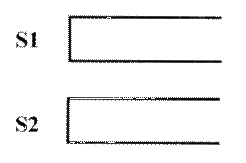
把「不能进同一个栈」的值对建成冲突图,用二分图染色判定并决定分栈,再按 a<b<c<d 每步取最小合法操作,贪心模拟出字典序最小的操作序列。
OJ: roj
题目 ID: 3567
难度:提高+/省选-
标签:贪心二分图栈模拟
创建: 2026-10-02 08:01
更新: 2026-10-10 11:30
形式化题目
给定
a:把输入序列的队头压入; b:把栈顶弹出到输出序列末尾; c:把输入序列的队头压入; d:把栈顶弹出到输出序列末尾。
判断是否存在一串操作使输出恰好为 a < b < c < d 比较,操作之间用空格分隔);否则输出
以样例 1(a b a a b b a b:
| 步骤 | 操作 | 说明 | 已输出 | ||
|---|---|---|---|---|---|
| 1 | a |
压入 1 | |||
| 2 | b |
栈顶 1 正是 need,弹出 | |||
| 3 | a |
压入 3 | |||
| 4 | a |
压入 2(比栈顶 3 小,合法) | |||
| 5 | b |
弹出 2 | |||
| 6 | b |
弹出 3 | |||
| 7 | a |
压入 4 | |||
| 8 | b |
弹出 4,输入同时耗尽 |
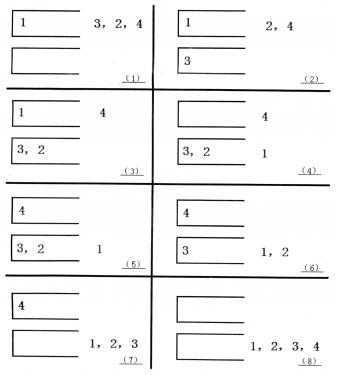
need 表示下一个必须输出的值。可以看到:每个栈自始至终保持从栈底到栈顶递减,need 一旦进入某个栈就停在栈顶,随叫随到——这个不变量正是后面贪心规则的来源。
正解
思路
朴素想法与瓶颈。 最直接的思路是搜索:每一步四种选择,或者枚举每个元素进哪个栈(
推导冲突条件。 考察两个位置
- 若
在位置 之前已经弹出,两者互不干扰,没有冲突。 - 否则
压在 上面, 必然先弹。此时若 ,升序输出却要求 先出,矛盾; 则顺序恰好正确,没有冲突。
所以危险情形是
两个方向都不可省:样例 1 中
建图与染色。 把每个值作为顶点,冲突对连边。一个栈装的值必须两两无冲突,即每个栈是独立集,所以:
- 图是二分图 ⟺ 两个栈够用,染色方案直接给出每个值进哪个栈;
- 图含奇环 ⟺ 无论怎么分都不行,输出
。
下图是样例 2(
graph LR
    n2["值 2"] --- n3["值 3"]
    n3 --- n4["值 4"]
    n4 --- n2
染色定完可行性,还差字典序。 二分图每个连通块的染色整体翻转后仍是合法染色,方案不唯一。由于 a 比 c 小,把「在输入中出现最早」的值染成 0(进 a,同块其余值跟着整体翻转。这是拿到字典序最小答案的第一步。
贪心模拟。 分栈固定后,每步只需在当前合法的操作里取字典序最小者。两条关键规则:
- 压入必须比栈顶小。若把大值盖在小值上面,小值是将来的 need,被压住后大值只有等 need 先弹,而 need 又被它挡着——死锁,所以
v > 栈顶的压法一律非法。这条规则保证栈始终递减、need 一旦进栈就停在栈顶,染色合法时模拟绝不会中途卡死。 - 按
a < b < c < d取最小合法操作。合法时先压a,它比b、d都小,而且「先压a再弹d」与「先弹d再压a」到达完全相同的状态,晚一步弹不会变差;a非法时(会盖死栈顶的 need,或比栈顶大)能弹 need 就弹b——b比c、d都小,且「先弹b再压c」同样与「先压c再弹b」等价;再轮到合法的c,最后才是d。输入耗尽后只剩弹出,弹不出 need 即输出。
样例 3(a c a b b d:压 2 进
代码
/**
* Author by Rainboy blog: https://rainboylv.com github: https://github.com/rainboylvx
* rbook: -> https://rbook.roj.ac.cn https://rbook2.roj.ac.cn
* rainboy的学习导航网站: https://idx.roj.ac.cn
* create_at: 2026-10-10 11:30
* update_at: 2026-10-10 11:30
*/
#include <bits/stdc++.h>
using namespace std;
typedef long long ll;
const int INF = 1000000000;
int n;
int a[1005];
// 冲突图 CSR
int deg[1005];
int start_[1006];
vector<int> edges;
// 二分染色,返回 color[1..n];染不上返回空
vector<int> two_color(int first[]) {
vector<int> color(n + 1, -1);
for (int seed = 1; seed <= n; seed++) {
if (color[seed] != -1) continue;
color[seed] = 0;
vector<int> q;
q.push_back(seed);
for (size_t qi = 0; qi < q.size(); qi++) {
int u = q[qi];
for (int t = start_[u]; t < start_[u + 1]; t++) {
int v = edges[t];
if (color[v] == -1) {
color[v] = color[u] ^ 1;
q.push_back(v);
} else if (color[v] == color[u]) {
return vector<int>();
}
}
}
// anchor:输入位置最早的成员,翻成 0
int anchor = q[0];
for (size_t i = 1; i < q.size(); i++)
if (first[q[i]] < first[anchor]) anchor = q[i];
if (color[anchor]) {
for (size_t i = 0; i < q.size(); i++)
color[q[i]] ^= 1;
}
}
return color;
}
// 贪心产出字典序最小操作序列;凑不出 1..n 则返回空
string smallest_ops(const vector<int>& color) {
vector<int> s1, s2;
vector<string> ops;
int ptr = 0, need = 1;
while (need <= n) {
bool b_now = !s1.empty() && s1.back() == need;
bool d_now = !s2.empty() && s2.back() == need;
if (ptr == n) {
if (b_now) { s1.pop_back(); ops.push_back("b"); }
else if (d_now) { s2.pop_back(); ops.push_back("d"); }
else return string();
need++;
continue;
}
int v = a[ptr];
bool push_s1 = color[v] == 0 && (s1.empty() || v < s1.back());
bool push_s2 = color[v] == 1 && (s2.empty() || v < s2.back());
if (push_s1) { s1.push_back(v); ops.push_back("a"); ptr++; }
else if (b_now) { s1.pop_back(); ops.push_back("b"); need++; }
else if (push_s2) { s2.push_back(v); ops.push_back("c"); ptr++; }
else if (d_now) { s2.pop_back(); ops.push_back("d"); need++; }
else return string();
}
string out;
for (size_t i = 0; i < ops.size(); i++) {
if (i) out += " ";
out += ops[i];
}
return out;
}
int main() {
ios::sync_with_stdio(false);
cin.tie(nullptr);
if (!(cin >> n)) { cout << "0\n"; return 0; }
for (int i = 0; i < n; i++) cin >> a[i];
// first[v] = 值 v 在输入里的位置
int first[1005];
for (int i = 0; i < n; i++) first[a[i]] = i;
// build_conflicts
int suf[1006];
suf[n + 1] = INF;
for (int i = n; i >= 1; i--) suf[i] = min(a[i - 1], suf[i + 1]);
for (int v = 0; v <= n; v++) deg[v] = 0;
for (int j = 1; j <= n; j++) {
int mn = suf[j + 1];
for (int i = 1; i < j; i++) {
int x = a[i - 1];
if (mn < x && x < a[j - 1]) {
deg[x]++;
deg[a[j - 1]]++;
}
}
}
start_[1] = 0;
for (int u = 1; u <= n; u++) start_[u + 1] = start_[u] + deg[u];
edges.assign(start_[n + 1], 0);
vector<int> fill(start_, start_ + n + 2);
for (int j = 1; j <= n; j++) {
int mn = suf[j + 1];
for (int i = 1; i < j; i++) {
int x = a[i - 1];
if (mn < x && x < a[j - 1]) {
edges[fill[x]] = a[j - 1];
fill[x]++;
edges[fill[a[j - 1]]] = x;
fill[a[j - 1]]++;
}
}
}
vector<int> color = two_color(first);
string ans = color.empty() ? string() : smallest_ops(color);
if (ans.empty()) cout << "0\n";
else cout << ans << "\n";
return 0;
}#!/usr/bin/env python3
# Author by Rainboy blog: https://rainboylv.com github: https://github.com/rainboylvx
# rbook: -> https://rbook.roj.ac.cn https://rbook2.roj.ac.cn
# rainboy的学习导航网站: https://idx.roj.ac.cn
# create_at: 2026-10-02 08:01
# update_at: 2026-10-02 08:50
import sys
from array import array
INF = 10**9 # 空后缀的哨兵:比 1..n 里任何值都大
def build_conflicts(a: list[int], n: int) -> tuple[list[int], array]:
"""建「不能进同一个栈」的冲突图,返回 CSR 邻接表 (start, edges)。
存在 i<j<k 使 a[k]<a[i]<a[j] 时,a[i] 与 a[j] 连边:同栈里 a[j] 压在
a[i] 上必须先弹,但更小的 a[k] 又排在它俩之前要先输出,a[i] 只能晚于
a[j] 弹出,与升序输出矛盾,所以这两个值必须分进两个栈。
最坏约 n²/2 条边,用「度数前缀和 + 回填」的 CSR 存储,内存只有 O(n+E)。
"""
suf = [INF] * (n + 2) # suf[j] = min(a[j..n])(下标 1..n,n+1 位是空后缀哨兵
for i in range(n, 0, -1):
suf[i] = min(a[i - 1], suf[i + 1])
deg = [0] * (n + 1) # 第一遍:数出每个值连了多少条边
for j in range(1, n + 1):
m = suf[j + 1] # 位置 j 之后的最小值,即候选的 a[k]
for i in range(1, j):
x = a[i - 1]
if m < x < a[j - 1]: # a[k] < a[i] < a[j]
deg[x] += 1
deg[a[j - 1]] += 1
start = [0] * (n + 2) # 前缀和:值 u 的邻接边存放在 [start[u], start[u+1])
for u in range(1, n + 1):
start[u + 1] = start[u] + deg[u]
edges = array("I", bytes(4 * start[n + 1]))
fill = start[:] # 第二遍:沿各自的游标回填,复用前缀和数组当游标
for j in range(1, n + 1):
m = suf[j + 1]
for i in range(1, j):
x = a[i - 1]
if m < x < a[j - 1]:
edges[fill[x]] = a[j - 1]
fill[x] += 1
edges[fill[a[j - 1]]] = x
fill[a[j - 1]] += 1
return start, edges
def two_color(start: list[int], edges: array, n: int, first: dict[int, int]) -> list[int]:
"""给每个值染 0/1(0 = 进 S1,1 = 进 S2);相邻必须异色,染不上返回空列表。
二分图每个连通块的染色整体可翻转:把「输入位置最早」的成员翻成 0,
贪心压入时就能先出字典序更小的 a;同块其余值跟着整体翻转。
"""
color = [-1] * (n + 1)
for seed in range(1, n + 1):
if color[seed] != -1:
continue
color[seed] = 0
queue = [seed]
for u in queue: # 列表边出队边追加,块内成员都收在 queue 里
for t in range(start[u], start[u + 1]):
v = edges[t]
if color[v] == -1:
color[v] = color[u] ^ 1
queue.append(v)
elif color[v] == color[u]:
return [] # 奇环:两个栈怎么分工都不够用
anchor = min(queue, key=first.__getitem__) # 输入位置最早的成员
if color[anchor]: # 整块翻转,让 anchor 染 0
for u in queue:
color[u] ^= 1
return color
def smallest_ops(a: list[int], n: int, color: list[int]) -> str | None:
"""贪心产出字典序最小的操作序列;凑不出 1..n 则返回 None。
四个操作按字典序是 a<b<c<d,每一步在「当前合法的操作」里挑最小的:
- 压入的值必须比栈顶小:把大的盖在小的上面,小的是将来的 need,
永远轮不到弹出,这种压法一定死路,不合法;
- 合法时先压 a——它比 b、d 都小,且「先压后弹」与「先弹后压」
到达完全相同的状态,晚一步弹 d 不会变差;
- 否则能弹出 need 的 b 最小(能弹 b 时压 a 必然非法),再轮到合法的 c,
最后才是 d——b 与先压 c 再弹同样等价,c 与先弹 d 后压同样等价;
- 输入耗尽只能弹,弹不出 need 说明这个染色救不回来。
"""
s1: list[int] = []
s2: list[int] = []
ops: list[str] = []
ptr = 0 # 下一个待压入的输入下标
need = 1 # 下一个该输出的值
while need <= n:
b_now = bool(s1) and s1[-1] == need # 此刻能否弹 b
d_now = bool(s2) and s2[-1] == need # 此刻能否弹 d
if ptr == n: # 输入耗尽,只能弹
if b_now:
s1.pop()
ops.append("b")
elif d_now:
s2.pop()
ops.append("d")
else:
return None # 弹不出 need:这个染色方案救不回来
need += 1
continue
v = a[ptr]
push_s1 = color[v] == 0 and (not s1 or v < s1[-1]) # 染给 S1 且压入合法
push_s2 = color[v] == 1 and (not s2 or v < s2[-1]) # 染给 S2 且压入合法
if push_s1: # a 最小,合法就先压
s1.append(v)
ops.append("a")
ptr += 1
elif b_now: # 压 a 非法时 b 最小
s1.pop()
ops.append("b")
need += 1
elif push_s2: # c 比 d 小
s2.append(v)
ops.append("c")
ptr += 1
elif d_now: # 压 c 非法(会盖死 need),只剩 d
s2.pop()
ops.append("d")
need += 1
else:
return None # 无路可走:这个染色方案救不回来
return " ".join(ops)
def solve() -> None:
try:
data = iter(map(int, sys.stdin.buffer.read().split()))
n = next(data)
a = [next(data) for _ in range(n)]
except StopIteration: # 输入为空或不足 n 个值,构不成 1..n 的排列
print(0)
return
first = {v: i for i, v in enumerate(a)} # 每个值在输入里的位置
start, edges = build_conflicts(a, n)
color = two_color(start, edges, n, first)
ans = smallest_ops(a, n, color) if color else None
print(ans if ans else 0)
if __name__ == "__main__":
solve()复杂度
- 时间:建图两遍枚举
, ;染色与贪心模拟各 ,合计 。 时内层判断约 次,实测远低于时限。 - 空间:冲突图最坏约
条边,用「度数前缀和 + 回填」的 CSR 邻接表存储,为 ;朴素的逐点 list邻接表在稠密反例(如)上会逼近 的解释器开销,超出 32 MB 限制。
总结
把「不能同栈」翻译成冲突图是本题的核心:冲突条件 a 优先;模拟阶段用「压入必须递减」维持 need 永在栈顶的不变量,再按 a<b<c<d 逐步取最小合法操作,等价状态可交换保证了每步贪心都朝字典序最小走。
验证:题面 3 组样例与 15 组真实测试数据全部一致;另与「对操作序列做 BFS 求字典序最小解」的暴力对拍